
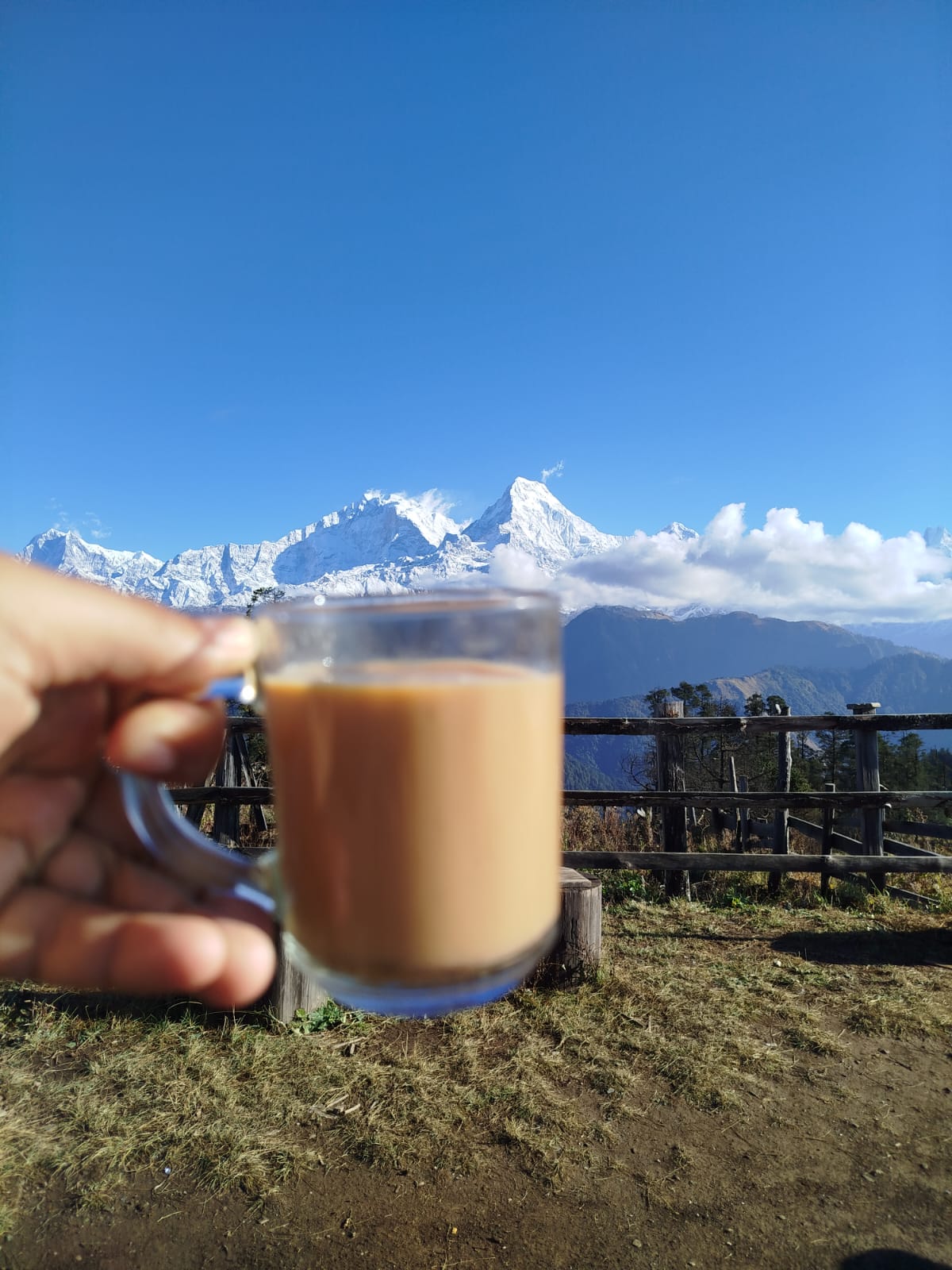
Sipping on Culture: A German’s Love Affair with Nepali Tea(chiya)
Drinking from a steaming mug of comforting home-made Earl Grey tea, on my Berlin flat, my thoughts
return to my recent travel venture in Nepal. The vibrant chaos of Kathmandu’s roads, the serene villages
hugged by the Himalayas, and people’s courtesy linger in my mind. But the only monarch among them is
omnipresent chiya, Nepalis’ favorite milk tea. From that first sip at a guesthouse to those several cups
with tourist-stranger friends, I was hooked on this milky, spiced beverage. As a German visitor, I was
confused at its omnipresence at first, but after having done my traveling, I knew why Nepalis love milk tea
so much. Join me as I demystify the cultural, social, and sensory reasons behind Nepali love for chiya, as
seen through the eyes of a foreign tea lover.
My First Chiya Experience: Sensory Awakening
Imagine this: I’ve just landed in Kathmandu after a brutal, punishing flight, my body exhausted and head
muddled. In my guesthouse, a warm host offers me a small terracotta cup of steaming, aromatic
liquid. Chiya, he grins, creases at the outer corners of his eyes and warmth in them.I drink with a jumpy
spasm and am alert as a rock. The tea is creamy and sweet and pungency-laden with cardamom,
cinnamon, an aftertaste of clove, perhaps. It lacks the bright lemony zing of the black tea I have at home
or the herbals my grandmother uses. This is full-bodied and subtle and irresistibly addictive. The first cup
set the tone for the rest of the journey, and I learned that chiya infused every part—served with every
meal, hawked by street vendors, and presented with tearful stories.
As a German, I only knew tea as utility beverages—chamomile for wake-up times in the middle of
sleepless nights or Earl Grey afternoons. Not chiya, though. It was not a drink; it was an experience, a
ritual, a liquid hug. The first cup set the tone for the rest of the journey, and I learned that chiya infused
every part—served with every meal, hawked by street vendors, and presented with tearful stories.
The Chiya Cultural Center
You would be able to understand why Nepali love chiya. Chiya is not a drink; it’s the backbone of Nepali
culture. Offering tea to guests is a universal sign of hospitality, a gesture that says, “You are welcome
here.” Whether you’re visiting a friend’s home in Bhaktapur, resting at a tea house on an Everest trek, or
chatting with a vendor in Pokhara, you’re likely to be handed a cup of chiya.
It’s a way to pause, connect, and share a moment, no matter how brief. I especially remember one night in
Pokhara, where I was sharing a balcony at a hotel with some locals, gazing over the Annapurna range. As
the sun dipped behind the mountains, we were sipping cups of chiya, steam rising in the chilly air.
The chat was so easy—chatting about family, chatting about travel, and tomorrow’s dreams. I even
belonged to it, even though I was a stranger.
This is the alchemy of chiya: it breaks down walls and unites. The part played by chiya in Nepali culture
can’t be exaggerated. It is allegedly, from places like Danfe Tea, where milk tea has become part of Nepali
culture over the centuries, from plain black tea to the spiced one that’s being drunk today. That it’s
inexpensive and ubiquitous makes it a beverage of all classes regardless of caste, religion, or purse. In as
cosmopolitan a society as Nepal, chiya is a thread that binds.
The Technique of Preparing Chiya
And why is the chiya special? It’s in the ingredients and work that are put into producing it. Nepali chiya
boiled is boiled tea leaves, milk, water, sugar, and a blend of spices. The stars are the spices—cardamom
adds floral sweetness, cinnamon adds warmth, cloves add an aroma of pungency, and ginger or black
pepper adds spiciness. The brew is boiled to creamy richness, a warm and stimulating beverage.
I happened upon chiya preparation in a small tea stall in Bhaktapur. The owner, a spare but smiling figure,
greeted me again behind the counter. He scooped out loose-leaf black tea from a gigantic urn, ground up
cardamom pods in his palms, and added a shard of cinnamon bark. The aroma wafted as the pot
overflowed across a candle’s flame, summoning two of the regulars. “Patience,” he said, stirring slowly.
“Good chiya takes time.” When he strained the tea through a sieve into small cups, it was creamy brown
and nearly latte-colored. That attention, that devotion to the craft of it, is what chiya is so well-loved.
To the curious, ArtfulTea designates Nepali black tea, traditionally made in regions like Ilam, as fully
oxidized with robust taste that can bear spices and milk. By mixing tea’s high elevation and Nepal’s
unique spice blends, chiya is not the same as its Indian chai.
Why Nepalese People Love Chiya: Five Major Reasons
So why is chiya so popular in Nepal? Going by my experience and interaction with the locals, these are
the reasons why Nepalese just can’t have enough of it:
1. Comfort and Warmth
Nepal’s climate is as unpredictable as the nation’s politics – from the blistering Himalayas to the soggy
Terai plains. Chiya is a warm and comforting drink irrespective of the weather. Mornings on my Himalayan
trek were cold enough that I could actually see my own breath. A hot cup of chiya, drunk from an
aluminum cup which was warming my freezing hands, was a blessing. Nepalis are no wonder using it to
wake up in the morning or after sunset.
2. Social Bonding
Chiya is a social beverage which is normally shared with others. There are teaparty households, friend
reunions at the hip chiya stand, and strangers bonding with a cup. It’s a social ritual that has a way of
uniting people. I would see groups of youth hanging around tea stands when I was in Kathmandu,
laughing and drinking chiya as motorbikes whizz by. It’s a means of relaxation and living in the moment,
something we could all benefit from.
3. Energy Boost
Both sugar shock and black tea caffeine, chiya is a purely natural energy beverage. Nepalis will drink
dozens of cups in a day trying to power work, school, or daylong treks. I’ve seen Thamel vendors fill
thermos full of chiya and sell cups. It’s the coffee substitute of the country, but with a heck of a lot more energy.
4. Health Benefits
Chiya is nutritious and delicious. Black tea has antioxidants, which are beneficial to general health.
Digestible spices like cardamom, anti-inflammatory cinnamon, and comforting ginger for a sore throat
are included. Food Pleasure and Health informs us that spices taste and contribute to health, so chiya is
healthy. Milk has calcium, a blessing for growing children and even grown-ups.
5. Affordability and Accessibility
The most important reason why chiya is liked so much is that it is cheap. It is not costly at a street stall, a
few rupees, and even in a cafe, it is not high-priced. Therefore, chiya is a drink for all, from farmers to city
people. It is also easy to prepare at home because it requires nothing more than tea, milk, sugar, and
spices.
A German Perspective: Chiya vs. German Tea Culture
Rearing in Germany, I was astounded at other chiya’s difference from what I had become accustomed to.
Tea, as a medicinal or personal issue—not social, just like spice becomes involved—camomile with a sore
throat, peppermint with a stomachache, black for a holiday. It simply is not. Chiya is thus bitter, social, and
very much part of daily ritual.
A Rich Experience with Nepali Chiya
For one thing, chiya was too rich. Spices , the sweetness , creaminess—overall, too much. But with each
successive drink, the richer I came to like it. The cardamom tasted of Christmas cookie, cinnamon
spiciness hot cookie. What actually won me over, though, was the way you drank it. Chiya is never solo in
Nepal. It’s enjoyed with the world, at times with laughter and gossip. That sense of belonging was an
awakening to me, a call to breathe and connect. I was also fascinated by the preparation process.
In Germany , tea is normally a quick ceremony—teabag into boiling water, finished.
But chiya is an exercise in patience, a simmer to coax out the flavors. To see vendors prepare it over open
flames, stirring with gentle care, was like therapy. So different from our go-go, convenience-based life at
home.
Conclusion: A Love Letter to Chiya
Chiya is not a drink; it’s an entry into Nepali taste, a token of welcome, a symbol of friendliness and
stubbornness. Me, a wandering German stranger, was baffled by the flavor and stimulated by the attitude
behind it. Wherever you take chiya, however far you walk to have chiya at tea house, like tea house of
Kathmandu or Himalayan or at your home, it’s an invitation to stay around, be with, and enjoy the
moment. The next time you require a boost or a kick, make a pot of chiya. Let spices carry you away to
Nepal’s frenzied street life, each cup an epic in itself. Maybe you too will be so enchanted by it as this